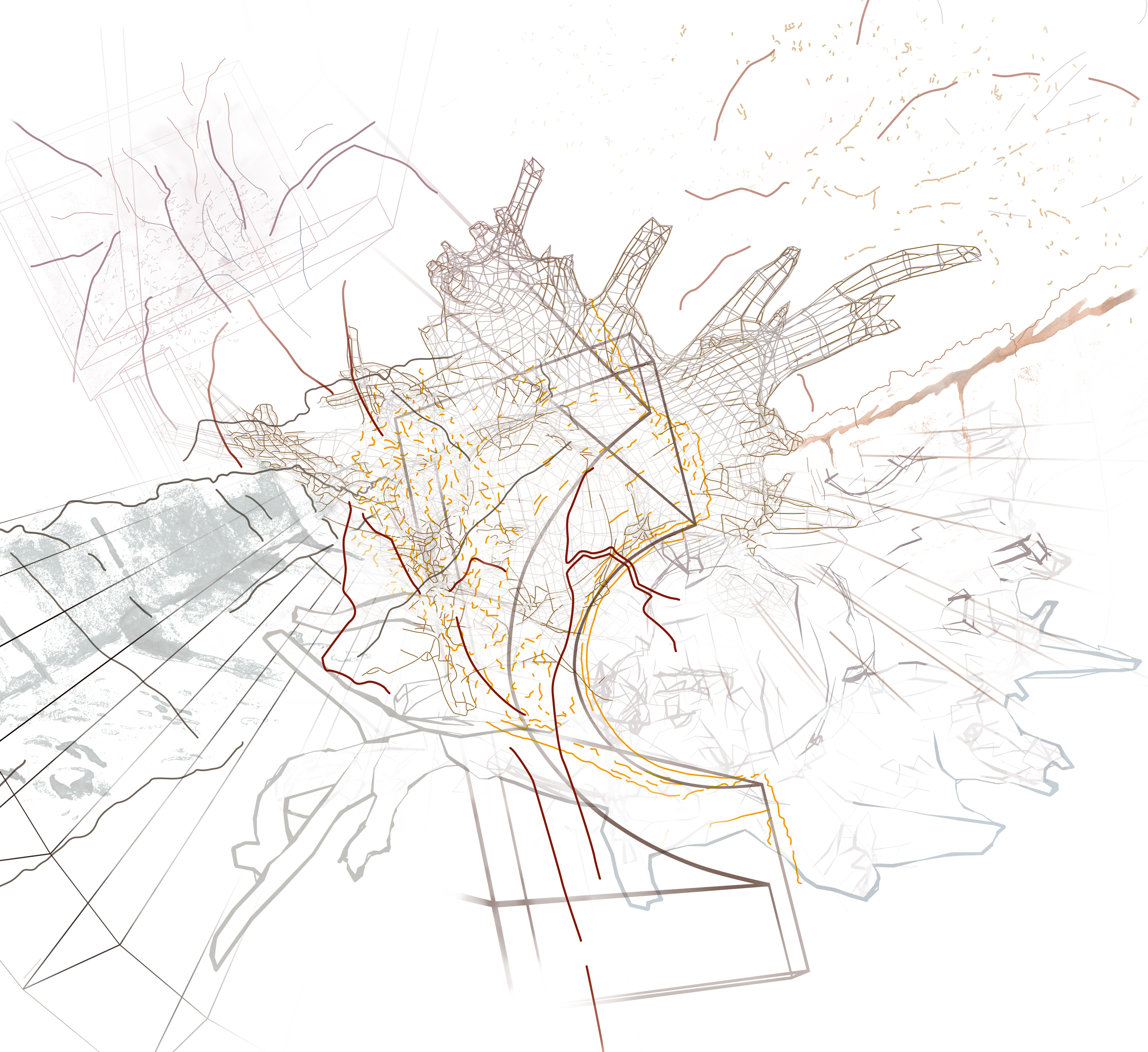
Seen and Unseen began with walks around Folsom Lake reservoir in California, where changes in the waterline reveal and conceal traces of a submerged landscape: the remains of Mormon Island goldrush town, fragments of historic mining infrastructure, exposed tree trunks, old roads, drainage channels, and the North Fork Ditch. These remnants reveal the lake as a layered place—part natural environment, part engineered system, and part historical archive.
The project considers how landscapes hold evidence of what has disappeared. The terrain exposed during low water levels becomes a meeting point between human interventions, ecological change, and personal experience.
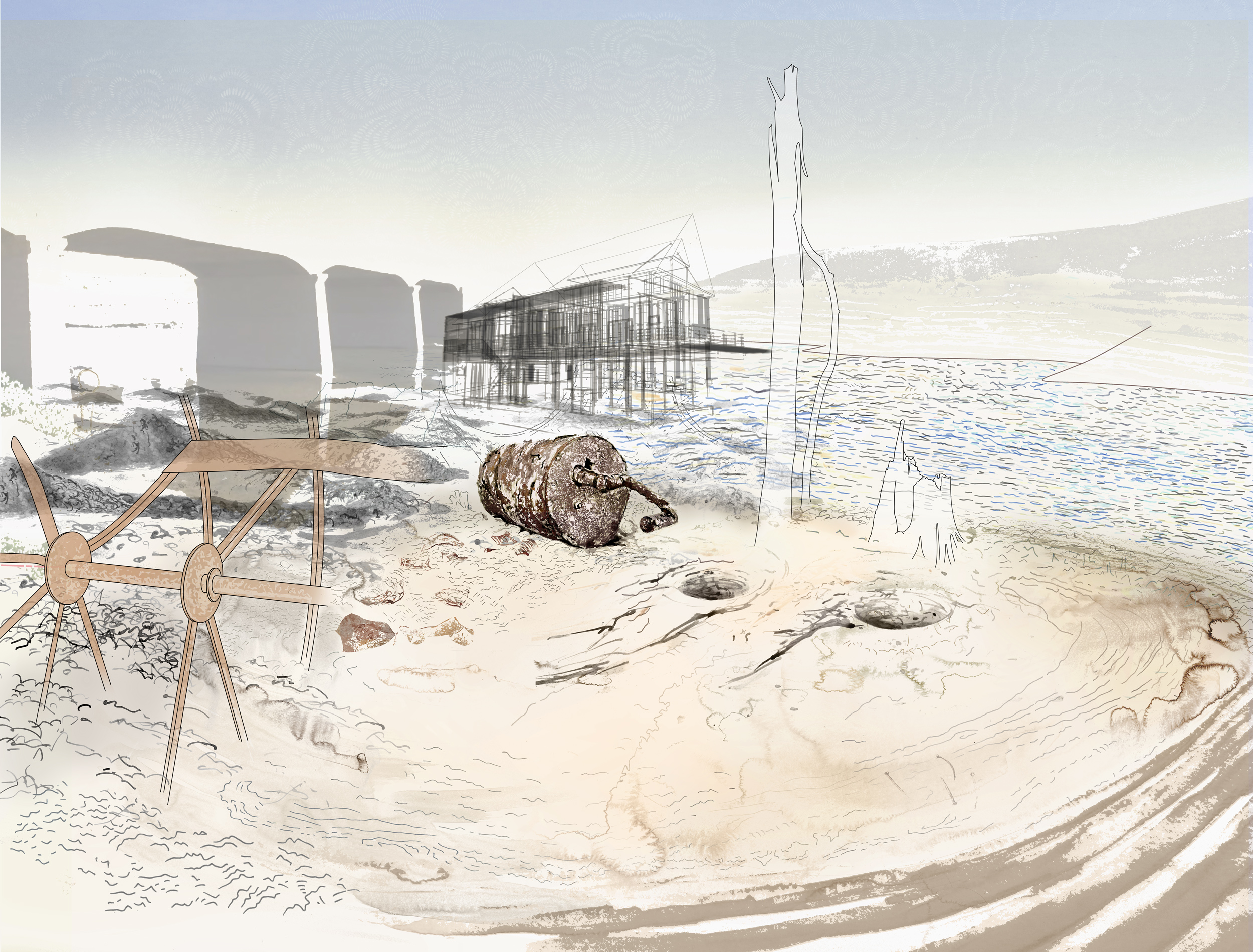
Allowing the landscape to slowly reveal itself over time, the work developed through a process of walking, drawing, and researching. Ink and wash studies record the physical landscape and its exposed structures. Digital and mixed-media drawings extend these observations into an invented space, where topographic lines, fragments of architecture, trees, water, and geological forms overlap. Rather than representing a single view, the images combine multiple ways of seeing and knowing a place.
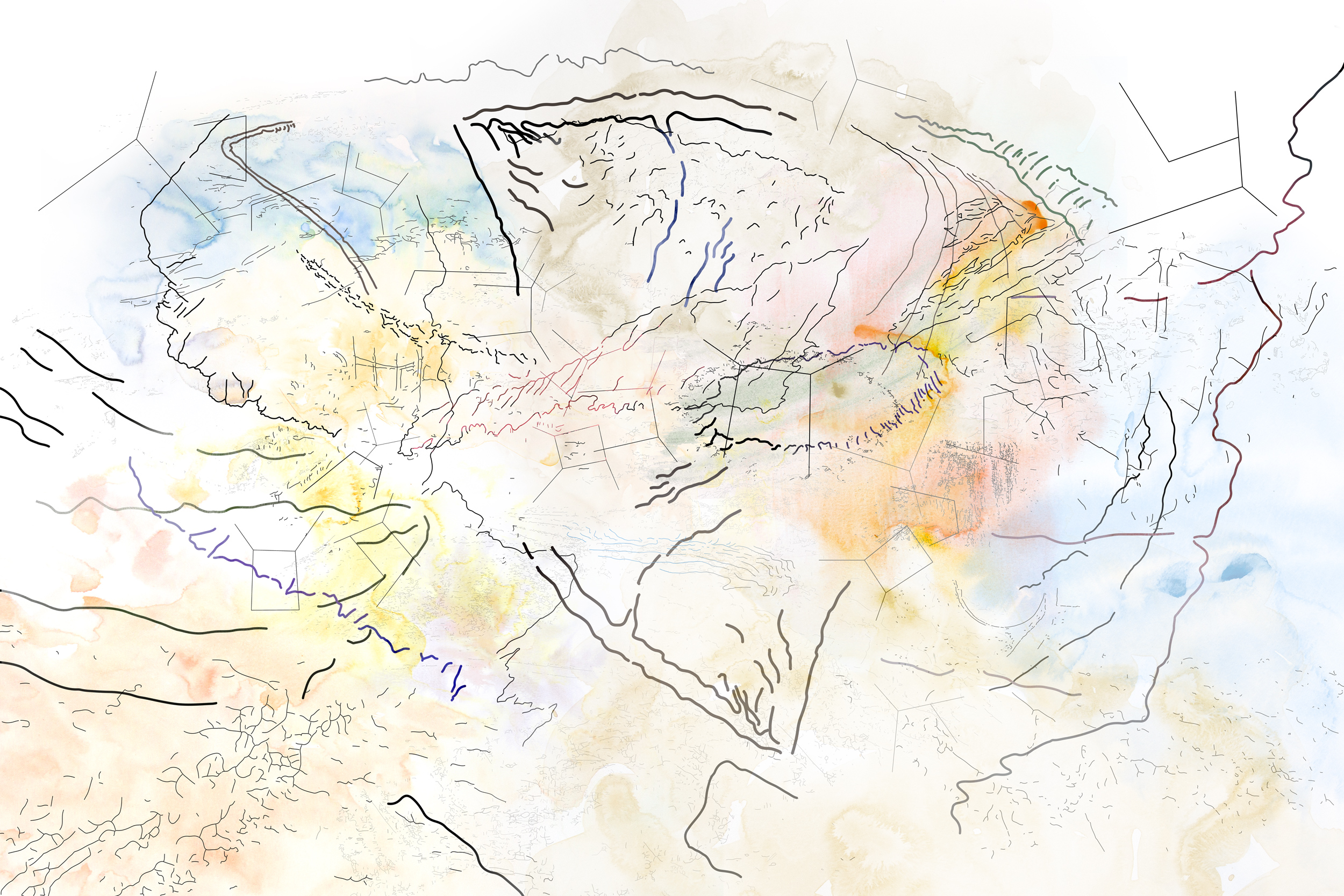
The project is also connected to my childhood experiences of landscape. My father, an industrial historian in the United Kingdom, often pointed out traces of former infrastructures: the path where a railway once ran, the depression marking an old canal bed, or the wooded area concealing a mine shaft. These encounters taught me to understand landscape as something active and layered—a place where the past continues to reveal itself in the present.
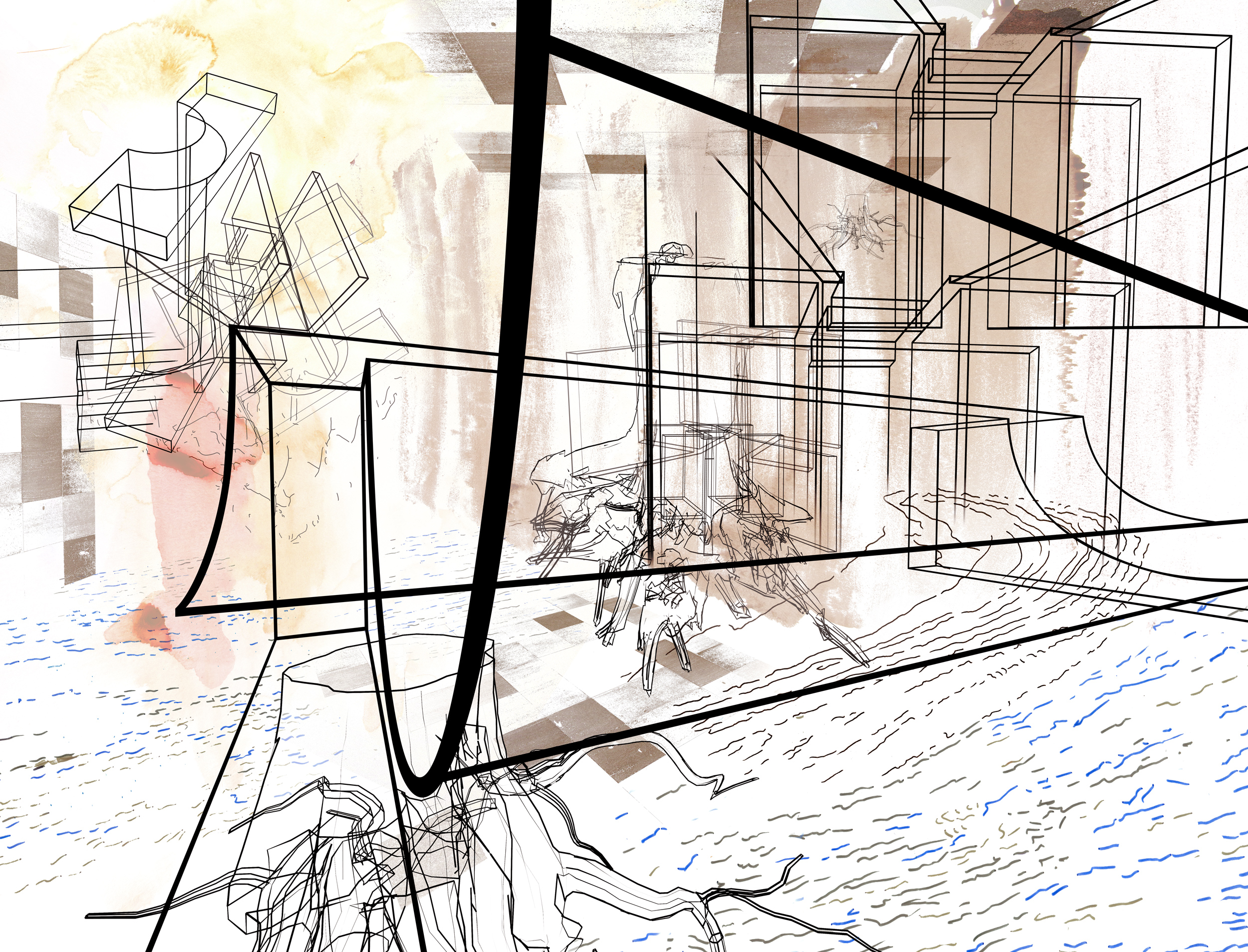
In Seen and Unseen, drawing becomes a way of attending to that presence. The works do not attempt to document Folsom Lake objectively. Instead, they move between observation and invention, using digital tools and physical materials to explore how places are transformed, imagined, and remembered.